
The light source used in red light therapy is usually not a regular household red bulb. Most modern red light therapy devices use specialized red and near-infrared LED bulbs, LED chips, or LED arrays designed to emit specific therapeutic wavelength ranges, commonly around 630nm, 660nm, 810nm, 850nm, and sometimes 940nm, depending on the device design and intended application.
In photobiomodulation, the goal is not simply to make the skin look red under a colored lamp. The goal is to deliver controlled light in biologically relevant red and near-infrared ranges, with appropriate irradiance, coverage, distance, treatment time, and safety controls. Scientific reviews describe photobiomodulation as the use of low-level red or near-infrared light to influence cellular processes, and both lasers and LEDs have been studied as light sources.
For spas, recovery centers, gyms, wellness studios, beauty salons, clinics, and distributors, this distinction matters. A device marketed as “red light” may use anything from a basic red lamp bulb to a professional-grade LED array. The business outcome, client experience, safety profile, and equipment lifespan can be very different.
Red light therapy typically uses LED red light therapy bulbs or LED chips that emit narrow-band red and near-infrared light. These are different from regular red-colored light bulbs because they are selected for specific wavelengths, output intensity, beam angle, heat control, and treatment coverage.
A quality red light therapy lamp bulb or LED panel may include:
| Light Type | Common Wavelengths | Visible? | Typical Role |
|---|---|---|---|
| Red LED light | 630nm, 633nm, 660nm | Yes | Skin-focused wellness, surface-level applications |
| Near-infrared LED light | 810nm, 830nm, 850nm, 940nm | Mostly invisible | Deeper tissue-oriented wellness and recovery applications |
| Laser light | Varies by device | Depends on wavelength | Targeted professional or medical PBM applications |
| Incandescent red bulb | Broad spectrum, not precise | Yes | General lighting or heat; not ideal for controlled PBM |
| Infrared heat lamp | Broad infrared heat output | Usually not visible | Heat therapy, not the same as LED photobiomodulation |
For commercial red light therapy beds and panels, LED arrays are the most practical light source because they can cover large treatment areas, offer customizable wavelength combinations, and are easier to scale for full-body equipment. LEDs are also commonly discussed in photobiomodulation research as an alternative to lasers because they can irradiate larger areas and are generally more practical for wearable, panel, and full-body systems.
The type of light used in red light therapy is generally low-level red light and near-infrared light. The technical term often used in research and medical-device discussions is photobiomodulation, or PBM.
Red light therapy does not rely on ultraviolet light, tanning light, or bright white light. It uses selected parts of the visible and near-infrared spectrum. In simple terms:
Red light is visible and commonly falls around 620–700nm.
Near-infrared light is mostly invisible and often falls around 700–1000nm in PBM discussions.
Red + near-infrared combinations are common in commercial devices because different wavelengths interact with tissue differently.
A dermatology review describes LED and low-level laser therapy as approaches used in skin-related applications, while a broader PBM review notes that laser and LED light can both produce photobiomodulation effects under appropriate parameters.
For buyers, the most important point is this: the wavelength matters more than the color of the bulb. A bulb that looks red is not automatically a red light therapy bulb.
No. Red light therapy bulbs are not the same as regular red bulbs.
A regular red bulb may simply use colored glass, coating, or broad-spectrum light filtered to appear red. It is made for visual color, mood lighting, decoration, heating, or ambiance. It is not usually designed to deliver a verified red light therapy wavelength, measured irradiance, or consistent photobiomodulation dose.
A red light therapy LED bulb or panel is different because it should be engineered around measurable specifications:
| Feature | Regular Red Bulb | Red Light Therapy LED Bulb or Device |
|---|---|---|
| Main purpose | Decoration, heat, general lighting | Controlled light delivery |
| Wavelength precision | Usually not specified | Specific nm range listed |
| Irradiance | Usually not provided | Should be measurable |
| Heat output | Can be high | Managed through LED design and cooling |
| Treatment consistency | Low | Higher when engineered well |
| Suitable for commercial sessions | Usually no | Yes, if professionally designed |
| PBM relevance | Unclear | Designed for photobiomodulation use |
This is why asking “can you use a regular red bulb for red light therapy?” is important. For casual relaxation, a red bulb may create a warm visual effect. For red light therapy, it is not a substitute for a device designed with wavelength-specific LEDs and tested output.
Modern red light therapy equipment usually uses LEDs because they are practical, scalable, and efficient. A single small consumer device may use a few LED chips. A commercial red light therapy panel may use hundreds or thousands. A full-body red light therapy bed or pod may use large LED arrays to provide broad and more uniform coverage.
LEDs are popular in commercial photobiomodulation devices because they can offer:
A review comparing lasers and LEDs in PBM notes that LEDs have advantages including easier large-area irradiation, lower cost per milliwatt, and fewer laser-specific safety considerations.
For a wellness business, that makes LED red light therapy especially attractive. A recovery center or spa does not usually need a single-point laser beam; it needs repeatable full-body or large-area sessions with consistent user experience.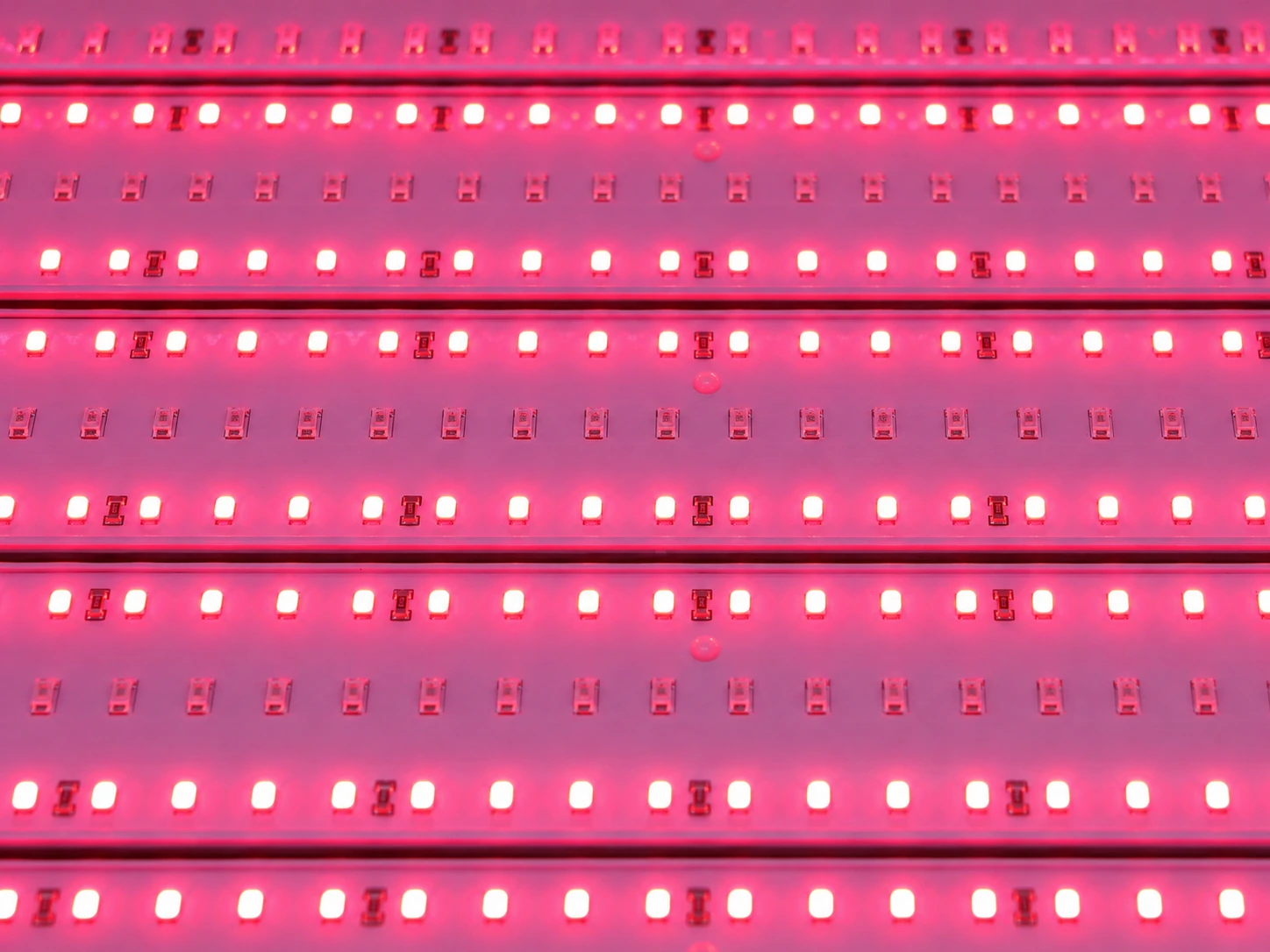
Two of the most common search terms in this category are red light therapy 660nm and near infrared light therapy 850nm. These wavelengths are popular because they represent two useful categories of PBM light.
The 660nm wavelength is visible red light. It is commonly used in LED red light therapy devices for skin-focused and surface-level wellness applications. Many commercial devices combine 660nm with other red wavelengths such as 630nm or 633nm.
Red light in this range is often associated with cosmetic wellness, skin appearance, and superficial tissue applications. However, businesses should avoid promising disease treatment or guaranteed clinical outcomes unless the device has the correct regulatory clearance and claims authorization in the target market.
The 850nm wavelength is near-infrared light. It is mostly invisible to the human eye, although some LEDs may show a faint red glow. Near-infrared wavelengths are often used in wellness and recovery devices because they may penetrate deeper than visible red light.
Many professional LED red light therapy panels, beds, and pods combine red and near-infrared wavelengths to broaden application potential. For example, Magique Power’s red light bed and panel product listings include wavelength combinations such as 633nm, 660nm, 810nm, 850nm, and 940nm, depending on the model and customization options.
Red light and infrared light therapy are related, but they are not identical.
Red light therapy uses visible red wavelengths. Clients can see the light, and it is often used in beauty, skin wellness, and general photobiomodulation applications.
Near-infrared light therapy uses longer wavelengths that are mostly invisible. It is commonly included in recovery, sports performance, muscle wellness, and full-body devices.
Here is a simple comparison:
| Category | Red Light | Near-Infrared Light |
|---|---|---|
| Common wavelengths | 630nm, 633nm, 660nm | 810nm, 830nm, 850nm, 940nm |
| Visibility | Visible red | Mostly invisible |
| Common use positioning | Skin, beauty, surface wellness | Recovery, deeper tissue wellness |
| Heat sensation | Usually mild | Usually mild if LED-based |
| Common device format | Panels, masks, beds, lamps | Panels, beds, pods, wraps |
| Best commercial use | Beauty salons, spas, wellness rooms | Gyms, recovery centers, spas, clinics |
Many commercial buyers choose combined red + near-infrared devices because they can serve a wider range of customer expectations. A beauty salon may emphasize skin appearance and self-care. A gym or recovery studio may emphasize muscle recovery and post-workout wellness. A wellness center may position the device as a premium full-body relaxation and recovery service.
A common buyer question is whether to choose a red light therapy lamp bulb, a red light therapy lamp, or a red light therapy LED panel.
The answer depends on coverage, business model, and session volume.
A red light therapy lamp bulb is usually a screw-in or focused bulb-style device. It may be useful for small-area exposure, home use, or entry-level applications. However, it usually has limited coverage and may not create a professional client experience for commercial facilities.
A lamp may include one or more bulbs mounted on a stand or arm. This can be useful for localized treatment positioning, especially in small wellness rooms. The limitation is that the client may need to reposition frequently, and the session may feel less premium compared with a panel, bed, or pod.
An LED panel uses many LED chips arranged in a flat surface. Panels are popular because they can cover larger areas, mount on stands, connect in modular systems, and deliver red + NIR light at commercial intensity levels.
Magique Power’s red light panel category, for example, lists full-body LED panels with dual-wavelength and multi-wavelength options for professional and wholesale applications.
A red light therapy bed or pod is designed for full-body coverage. This format is often preferred by spas, recovery centers, aesthetic studios, and gyms that want a premium service with minimal staff intervention.
Magique Power’s red light bed collection includes commercial full-body red and near-infrared beds, including customizable wavelength options for B2B buyers.
For most commercial wellness applications, the best light source for red light therapy is a professional LED array using verified red and near-infrared wavelengths.
That does not mean lasers are ineffective. Lasers are also used in PBM, especially in targeted clinical or professional settings. But for commercial wellness equipment, LEDs are often more practical because they can cover larger body areas, cost less to scale, and fit into beds, pods, towers, and panels more easily.
A strong commercial red light therapy device should specify:
 Can You Use a Regular Red Bulb for Red Light Therapy?
A regular red bulb is not recommended as a substitute for a red light therapy device.
The main issue is control. A regular red bulb may look similar to the eye, but it usually does not provide the same wavelength precision, irradiance, beam angle, or dose consistency. It may also generate unnecessary heat without delivering meaningful PBM parameters.
For business owners, using regular bulbs as a “red light therapy” service can create several problems:
A professional red light therapy service should be based on equipment with clear specifications and appropriate documentation, not visual color alone.
When purchasing red light therapy LED lights for a business, the “bulb” is only one part of the decision. Commercial buyers should evaluate the whole device system.
A basic device may include only 660nm red light. A more advanced commercial device may include red and near-infrared wavelengths, such as 633nm, 660nm, 810nm, 850nm, and 940nm.
Ask for irradiance data and testing conditions. Without this, it is difficult to compare devices fairly.
For full-body wellness, uniformity matters. Hot spots and weak zones can reduce session consistency.
A beauty salon may prefer a bed or pod for premium client experience. A gym may prefer a panel system for fast turnover. A distributor may need several models at different price points.
Working directly with a manufacturer can help with customization, quality control, training materials, spare parts, and after-sales support.
In the United States, the FDA has described PBM devices as low-level light therapy devices and has issued draft guidance for 510(k) submissions. The American Society for Laser Medicine and Surgery notes that PBM devices have been cleared through the 510(k) process as adjunctive devices for temporary pain relief. Claims and classifications vary by intended use and jurisdiction, so businesses should verify local requirements before marketing services.
Not true. The color red does not guarantee the correct wavelength, power, or biological relevance.
Red light therapy is not the same as heat therapy. LED photobiomodulation devices are generally designed to deliver light without relying primarily on heat.
Wattage describes electrical power, not necessarily useful light delivered to the body. Irradiance, wavelength, distance, optical design, and treatment protocol matter more.
Near-infrared light is mostly invisible. A device can be working even if the 850nm LEDs do not appear bright.
A bulb may treat a small area. A professional LED panel or red light therapy bed is designed for broader coverage, better positioning, and more repeatable commercial use.
Beauty-focused businesses often choose red light therapy LED beds, pods, or panels for skin wellness, post-treatment relaxation, and premium membership programs. Red wavelengths such as 633nm and 660nm are especially relevant for positioning around skin appearance and rejuvenation support.
Gyms and recovery studios usually want red + near-infrared combinations. A device with 660nm and 850nm, or multi-wavelength red/NIR output, can be positioned for post-workout recovery, relaxation, and performance-oriented wellness routines.
Spas benefit from full-body red light therapy beds and pods because the experience feels premium and requires limited hands-on labor. A client can book a session much like a sauna, compression therapy, or wellness recovery treatment.
Distributors should pay close attention to specifications, certifications, packaging, spare parts, MOQ, OEM branding, and after-sales support. The difference between a basic red light therapy lamp bulb and a commercial LED bed is not just price; it is positioning, margin structure, and long-term support.
Clinics should be especially cautious with medical claims. Equipment selection should align with intended use, local regulations, staff training, and documentation requirements.
Before buying or reselling a red light therapy device, ask the supplier for:
| Buyer Question | Why It Matters |
|---|---|
| What wavelengths are used? | Confirms red/NIR targeting |
| Are wavelengths customizable? | Helps match market positioning |
| What is the irradiance? | Helps compare actual output |
| How is irradiance measured? | Prevents misleading comparisons |
| What LED chips are used? | Affects consistency and lifespan |
| Is there cooling? | Protects performance during repeated use |
| What is the beam angle? | Affects coverage and intensity |
| What certifications are available? | Supports import and compliance planning |
| Are OEM/ODM services available? | Important for distributors and private labels |
| What warranty and parts support are offered? | Critical for commercial uptime |
So, what kind of light bulb is used in red light therapy?
In most modern devices, the answer is: specialized red and near-infrared LEDs, not ordinary red bulbs. These LEDs are selected for specific wavelengths such as 660nm red light and 850nm near-infrared light, then arranged into bulbs, panels, beds, pods, or full-body systems.
For consumers, the difference affects safety and consistency. For commercial buyers, it affects client experience, positioning, compliance, operating cost, and ROI.
A regular red bulb can make a room glow red. A professional red light therapy LED device is engineered to deliver controlled photobiomodulation light. That is the difference that matters.
For spas, gyms, recovery studios, beauty salons, and distributors comparing red light therapy LED lights, Magique Power offers commercial red light therapy beds, panels, and customizable OEM/ODM solutions designed for full-body wellness applications, private label programs, and high-frequency business use.
Red light therapy usually uses specialized LED bulbs, LED chips, or LED arrays that emit specific red and near-infrared wavelengths, commonly around 630nm, 660nm, 810nm, 850nm, and sometimes 940nm.
No. Regular red bulbs are usually designed for color or heat, not controlled photobiomodulation. Red light therapy bulbs are designed around specific wavelengths, output intensity, and treatment consistency.
A regular red bulb is not recommended for red light therapy because it usually lacks verified wavelength, irradiance, and dose control.
Red light therapy uses visible red light and often near-infrared light. These wavelengths are commonly used in photobiomodulation devices.
660nm is one of the most common red light therapy wavelengths. It is visible red light and is often used in LED devices for skin and surface-level wellness applications.
850nm is a near-infrared wavelength commonly used in red light therapy panels, beds, and recovery devices. It is mostly invisible and often included for deeper tissue-oriented wellness applications.
For most commercial and wellness applications, LED red light therapy is preferred because LEDs can provide more precise wavelengths, lower heat, scalable coverage, and better device design flexibility.
The best light source for most modern red light therapy devices is a professional LED array using verified red and near-infrared wavelengths. Lasers are also used in PBM, but LEDs are more practical for full-body beds, panels, and commercial wellness equipment.
